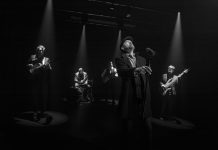








The Ukrainians are back with their last album, “Liberatsiya,” featuring three new tracks alongside their greatest hits, all reimagined with a fierce, modern sound. It is precisely this fusion of their post-punk past and powerful present that convinced us to name it our Album of the Week.
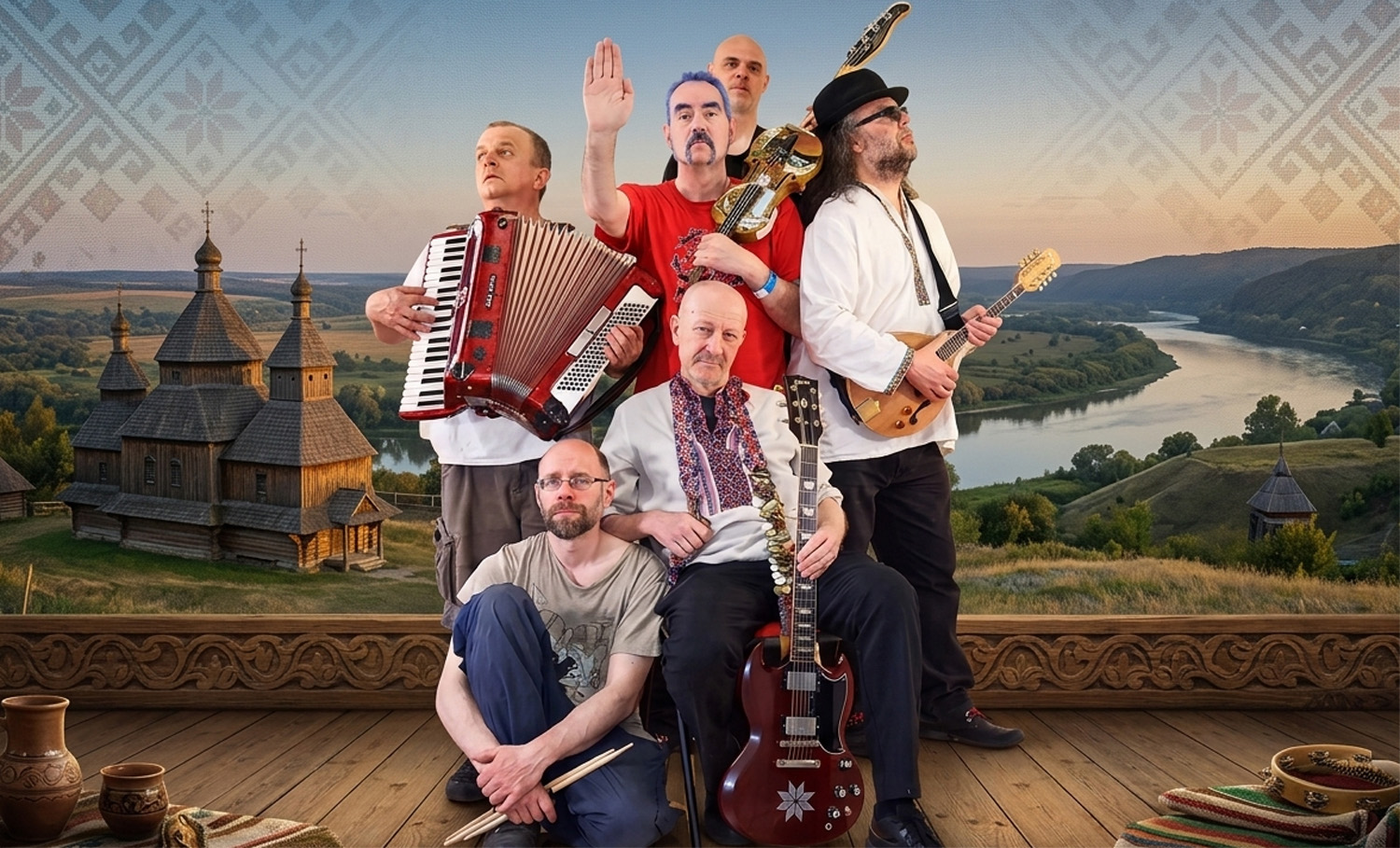
From John Peel to a Global Phenomenon
The foundations of The Ukrainians were laid by Peter Solowka in 1989. While still playing guitar for the cult band The Wedding Present, he convinced his bandmates to record Ukrainian folk songs for a session with the legendary radio DJ John Peel. That sound—a blend of British indie-rock and Slavic wildness—was so unique that it immediately captivated British critics and fans alike.
The band cemented their cult status with the groundbreaking EP “Pisni Iz The Smiths.” Translating Morrissey’s melancholic anthems into Ukrainian and performing them with a punk-driven intensity was a stroke of genius at the time. It opened doors for them worldwide and proved that Eastern European melody is a truly universal language.
Why “Liberatsiya” Right Now?
The Ukrainians have taken a bold step with the “Liberatsiya” project, re-recording many of the key tracks that originally defined the “Cossack Punk” genre in the early nineties. They’ve breathed new life into them, infused with the grit and experience gained from decades of relentless touring.
“Liberatsiya is not just a look back, but an energetic shout into the future, where old songs find new meaning and new ones solidify our legacy.”
This approach allows listeners to perceive the continuity of their artistic vision. Older compositions, once born of post-punk rebellion, now resonate with even greater urgency and technical precision that original analogue recordings couldn’t capture. Alongside revised classics, the album proudly showcases brand-new songs written recently, reflecting the current social and personal feelings of the band members in these turbulent times.
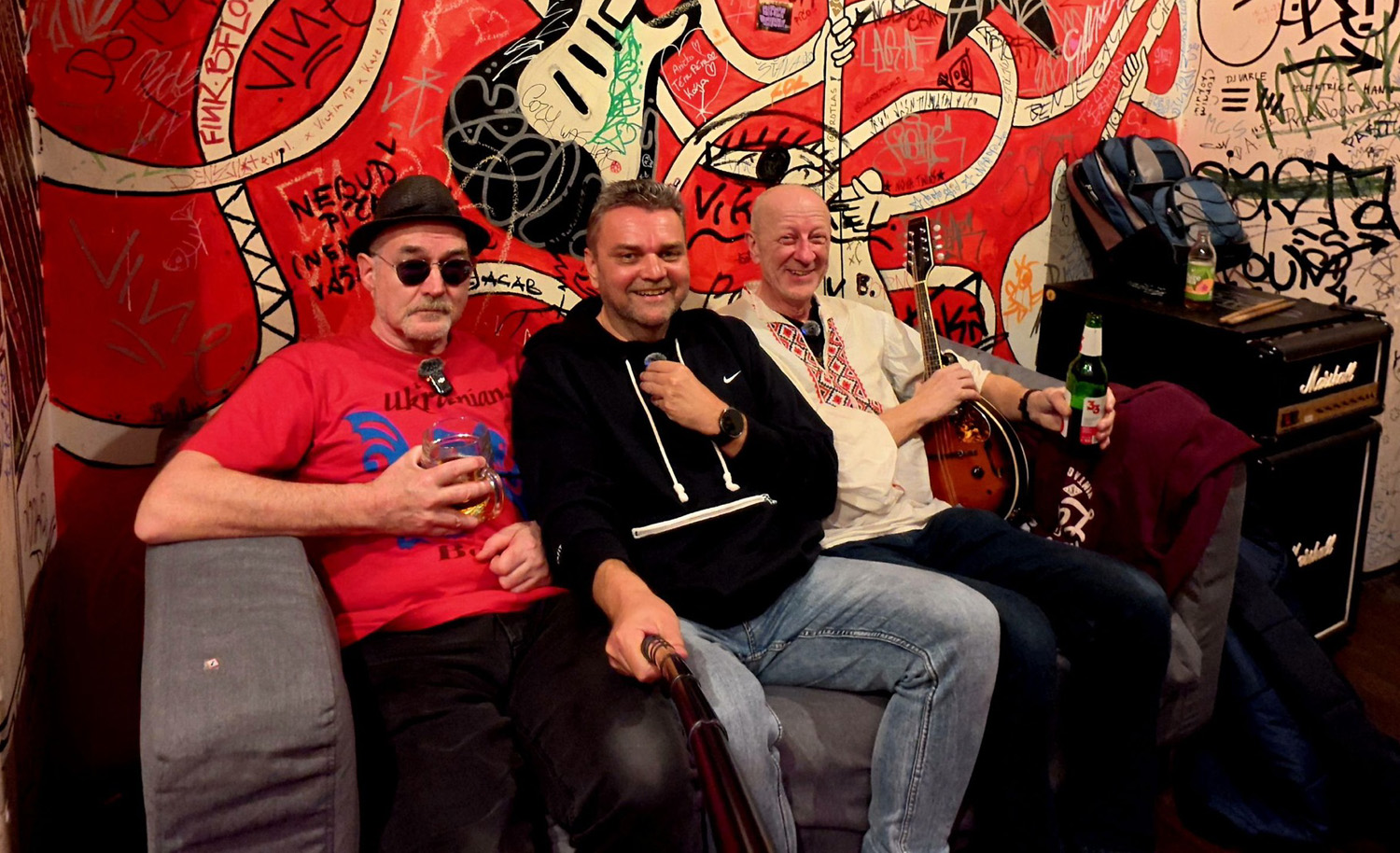
Insights from the Prague Interview (Rock Café, March 31, 2026):
- Surprise for Peter Solowka: He is shocked to discover they had a loyal fanbase in Slovakia in the 90s, despite never having physically performed there at the time.
- Why The Smiths Work in Ukrainian: They explain that adapting The Smiths wasn’t as difficult as it might seem, as the compositions of Morrissey and Marr utilize many minor chords and deep emotions. According to the band, these songs possess an “Eastern” charge that naturally aligns with the Ukrainian style.
- Bootleg Tapes in Kyiv: They recall their surprise in Kyiv in 1990, seeing people at street kiosks buying their recordings on small cassette tapes. This was at a time when they had only travelled there to film a music video, unaware that their music was spreading so far east.
- A Mission for Cultural Recognition: When they started, Ukraine was still part of the Soviet Union. In Britain, even universities erroneously taught that Ukrainian was merely a dialect of Russian. Their goal was to show that Ukraine has its own language, history, and a rich, distinct culture.
- Inspiration for Local Bands: In the 90s, they helped bands in Ukraine and Poland realize the value of their own languages. Until then, it was considered “cool” to sing in English and mimic American rock; however, after encountering The Ukrainians, many began creating in their native tongues.
- Thoughts on Gogol Bordello: They find the band incredibly exciting and fun. The interview also includes a story about how Gogol Bordello played their very first Slovak concert in a small club in Piešťany.
- Humility in Success: Peter Solowka admits it is still a humbling experience when hundreds of people in Poland or elsewhere in the world sing their lyrics and dance to songs that were once composed in a small room in Leeds.
- Liberation Tour with a Greater Purpose: The band has raised over £10,000 in Britain to help those affected by the war in Ukraine. They also discuss why this tour will likely be their last.
- A Visual Future: Details regarding an upcoming DVD that will capture their current live performance in top-tier quality using a three-camera setup.
The interview is presented in English, but you can enable Slovak subtitles on YouTube, provided by Karol Mikloš, whom we thank for his help. Enjoy the show.
Róbert Gregor (Photo: NMR)